Periscope Telephoto Lens vs Optical Zoom: Smartphone Camera Optics Explained
Smartphone photography has evolved at an extraordinary pace, transforming handheld mobile devices into formidable imaging tools. Yet, for over a decade, one physical constraint persistently plagued smartphone designers: thickness. While software algorithms mastered simulated portrait blur and nighttime multi-frame exposure, physical optical magnification remained chained to the laws of classical physics.
To magnify a distant subject optically without sacrificing image sharpness, the camera lens elements must physically move farther away from the image sensor. In a standard smartphone measuring merely 8 millimeters thick, there simply was not enough room to stack multiple glass elements perpendicularly without creating an enormous, unwieldy camera bump. The revolutionary breakthrough that shattered this physical barrier was the periscope telephoto mechanism.
In this comprehensive guide comparing a periscope telephoto lens vs optical zoom, we explain the optical physics of folded lens prisms, compare traditional telephoto lenses with periscope modules, evaluate sensor sizes and aperture trade-offs, examine low-light performance challenges, and look at the future of extreme focal length mobile photography.
The Physics of Optical Zoom: Why Thickness Matters
To understand the debate between a periscope telephoto lens vs optical zoom, we must first examine how focal length functions in photographic equipment.
Focal Length and Physical Distance
Focal length is the physical distance between the optical center of a camera lens and the focal point on the image sensor when the subject is focused at infinity. In 35mm full-frame photography terms:
- 24mm to 28mm: Standard wide-angle view (typical primary smartphone camera).
- 50mm to 85mm: Portrait focal lengths offering flattering facial compression (typically 2x to 3.5x optical zoom).
- 120mm to 240mm+: Telephoto and super-telephoto reach (typically 5x to 10x optical magnification).
In traditional camera lenses, achieving a longer focal length requires physically stacking glass elements further forward from the sensor. In a smartphone chassis that is less than 9mm thick, fitting a traditional optical telephoto lens beyond 3x magnification (around 70mm equivalent) is physically impossible without creating a massive protruding cylinder.
Traditional Smartphone Optical Zoom: Direct Lens Stacking
Standard smartphone optical telephoto systems rely on vertical, direct lens stacking. In this configuration, light passes straight through the protective outer lens cover, travels down through a vertical stack of plastic and glass optical elements, and strikes the image sensor sitting directly beneath on the logic board.
Advantages of Direct Optical Zoom
- Wider Physical Apertures: Because the optical path is direct and short, engineers can equip traditional 2x and 3x telephoto lenses with relatively wide apertures, such as f/1.8 to f/2.4.
- Compact Horizontal Footprint: The module occupies minimal surface area on the phone's internal motherboard, leaving ample room for cooling chambers and batteries.
- Superior Portrait Compression: A direct 3x (75mm equivalent) lens provides the classic focal length preferred by documentary and portrait photographers for natural facial rendering without wide-angle perspective distortion.
The 3x Physical Limitation
The fatal drawback of direct optical zoom is reach. Once designers attempt to exceed 3x or 3.5x magnification, the required physical depth exceeds the thickness of the phone. Attempting higher zoom on a direct lens system forces manufacturers to rely on digital crop zoom, which rapidly degrades image clarity into blurry, pixelated artifacts.
The Periscope Telephoto Lens: Folded Optics Architecture
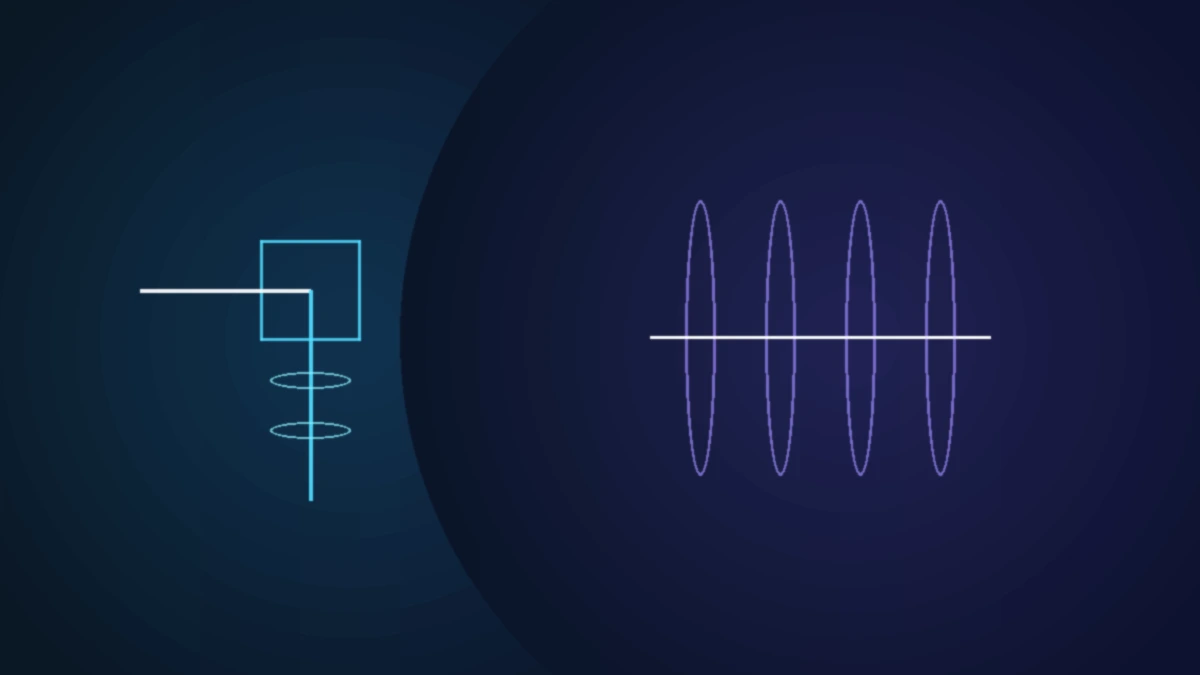
To overcome the smartphone thickness barrier, optical engineers looked to marine submarine periscopes for inspiration. A periscope telephoto lens uses folded optics to turn the entire camera mechanism 90 degrees sideways.
How the Folded Prism System Operates
- The 90-Degree Prism: Light enters the phone's camera cutout and immediately strikes a precision triangular prism or front-surface mirror.
- Sideways Refraction: The prism bounces the light ray exactly 90 degrees, directing the light horizontally along the length or width of the phone's interior body.
- Horizontal Lens Barrel: Because the light is now traveling sideways through the phone's spacious internal body, engineers can stack five, six, or seven optical elements horizontally over a distance of 15 to 25 millimeters.
- Perpendicular Image Sensor: At the far end of this horizontal optical tunnel sits the image sensor, mounted vertically perpendicular to the phone's rear glass.
By routing the light path horizontally, a periscope telephoto system can achieve 5x (120mm), 10x (240mm), or even greater true optical focal lengths while keeping the phone's exterior thickness sleek and pocket-friendly.
Head-to-Head Comparison: Periscope Lens vs Traditional Optical Zoom
To clearly see how these two telephoto architectures stack up against each other, the table below breaks down their critical operating characteristics:
| Feature / Metric | Traditional Direct Optical Zoom | Periscope Folded Telephoto Lens | Winning Advantage |
|---|---|---|---|
| Optical Zoom Reach | 2x – 3.2x (approx. 50mm – 75mm) | 5x – 10x (approx. 120mm – 240mm) | Periscope (Dramatically longer magnification) |
| Physical Orientation | Vertical (straight down onto sensor) | Horizontal (90° prism reflection along chassis) | Periscope (Solves phone thickness limits) |
| Maximum Aperture Size | Fast / Wide (f/1.8 – f/2.4) | Narrower / Slower (f/2.5 – f/3.4) | Traditional Zoom (More light intake) |
| Low-Light Night Performance | Clean; gathers substantial native light | Requires longer exposure or larger sensors | Traditional Zoom (Superior native low-light) |
| Sensor Size Compatibility | Accommodates standard to medium sensors | Requires compact rectangular or tailored dies | Tie (Modern periscopes now use huge 1/1.4" sensors) |
| Macro Capability | Floating elements allow close focus (10cm) | Typically long minimum focus (30cm – 60cm) | Traditional Zoom (Exceptional telemacro portraits) |
| Mechanical Complexity | Moderate (standard voice coil motor) | High (Prism OIS + horizontal motor drive) | Traditional Zoom (Simpler, more robust) |
The Optical Challenges of Periscope Systems
While periscope lenses unlock incredible reach, they introduce significant optical challenges that engineers must overcome:
1. Light Transmission Losses and Slower Apertures
Every time light reflects off a mirror or passes through additional glass elements, a fraction of photons is lost to internal reflection and absorption. Furthermore, because the horizontal barrel must fit inside the phone's thickness, the entrance pupil diameter is physically constrained, resulting in narrower apertures (typically f/2.6 to f/3.4 compared to f/1.7 on main cameras). In dimly lit concerts or night scenes, this reduced light gathering can introduce digital noise unless backed by advanced multi-frame night mode processing.
2. Extreme Sensitivity to Hand Shake (OIS Demands)
At 5x or 10x optical magnification, the slightest tremor in your hands is magnified exponentially on the screen. Capturing a blur-free photo at 120mm or 240mm requires ultra-sophisticated optical image stabilization. Leading manufacturers stabilize both the horizontal lens barrel and the 90-degree reflecting prism simultaneously, allowing the prism to tilt along two axes to neutralize hand vibration in real time.
3. Minimum Focus Distance Restrictions
Traditional 2x and 3x telephoto lenses can focus on objects just 10 to 15 centimeters away, making them outstanding for detailed close-up food and nature photography (telemacro). Long-range periscope lenses historically suffered from large minimum focus distances (often 50cm to 1 meter), making them ineffective for close-up desktop subjects.
Modern Breakthroughs: Tetraprisms and Floating Lens Groups
Over the past two years, mobile optics engineers have developed brilliant hybrid innovations that address the traditional compromises of periscope cameras:
Apple's Tetraprism Design
In the iPhone 15 Pro Max and iPhone 16 Pro series, Apple introduced the tetraprism folded optics design. Instead of bouncing light once sideways along a long horizontal tunnel, light bounces four times internally through a folded glass prism structure before hitting the sensor. This multi-bounce path mimics a long 120mm focal length inside an ultra-compact vertical footprint, featuring 3D sensor-shift stabilization that moves the sensor in three dimensions across 10,000 micro-adjustments per second.
Floating Telephoto Lens Groups (Telemacro Mastery)
Manufacturers like Xiaomi and Vivo integrated floating telephoto lens groups into their periscope and telephoto cameras. Inside the lens barrel, optical elements are split into two groups that move independently. When shooting distant landmarks, the groups move together for infinite focus; when focusing on a nearby subject, the floating group shifts forward, enabling crisp macro photography as close as 10 to 15cm with natural, creamy optical bokeh.
Real-World Photography Scenarios: Which Lens Fits Your Style?
When selecting a smartphone camera, understanding your primary photographic subjects will determine whether you need a periscope telephoto or standard optical zoom:
Choose Standard Optical Zoom (2x – 3.2x) For:
- Portraits of People and Pets: A 50mm to 75mm lens provides the most flattering facial proportions without flattening features or requiring you to stand twenty feet away from your subject.
- Indoor and Low-Light Social Photography: Wider f/1.8 to f/2.2 apertures gather significantly more light in dimly lit restaurants and living rooms.
- Food and Product Photography: Close minimum focus distances allow you to capture detailed textures on plates, watches, and flowers.
Choose Periscope Optical Zoom (5x – 10x+) For:
- Stadium Sports and Live Concerts: Essential for capturing crisp facial expressions of athletes on the field or performers on distant concert stages.
- Wildlife and Bird Photography: Allows you to photograph skittish animals from a respectful distance without scaring them away.
- Architectural Detail and Urban Landscapes: Compresses distant building facades, bridges, and city street layers for dramatic cinematic compositions.
The Sensor Size Revolution: Overcoming the Small-Sensor Dilemma
In the earliest iterations of periscope smartphone cameras, engineers were severely restricted by physical enclosure depths. Because a periscope rotates the optical path horizontally inside the smartphone, the thickness of the sensor itself directly dictated how thick the phone chassis had to be. Consequently, early periscope systems utilized very small 1/3.4-inch or 1/4-inch image sensors. These small sensors struggled intensely in low-light environments, requiring aggressively long shutter speeds or resulting in coarse chromatic noise.
Recent flagship engineering has revolutionized this dynamic through high-refractive glass molded prism elements and high-resolution quad-bayer sensors, such as 50MP 1/1.98-inch and even 200MP 1/1.4-inch sensors fitted onto folded periscope rails. By pairing large-area image sensors with high-aperture periscope prisms (reaching f/2.5 or f/2.6), modern flagships collect significantly more photons than older periscope iterations, dramatically bridging the low-light gap between traditional 3x direct lenses and 5x folded modules.
Computational Multi-Frame Super-Resolution Fusion
Another major optical milestone is multi-camera algorithmic fusion. When a user zooms to intermediate focal lengths—such as 4.2x zoom on a smartphone equipped with a 1x primary lens and a 5x periscope—the camera system cannot rely purely on optical zoom. Instead, advanced image signal processors simultaneously capture raw frames from both the high-resolution primary wide sensor and the folded periscope module.
The computational pipeline maps the sharp, detailed optical center from the periscope lens onto the broader field of view captured by the primary camera. Advanced machine learning models align parallax discrepancies, blend edge transitions seamlessly, and eliminate perspective distortion. This computational symbiosis ensures smooth optical transitions across continuous zoom ranges without jarring shifts in exposure, color temperature, or resolving sharpness.
Conclusion
The technological evolution of the periscope telephoto lens vs optical zoom represents one of the greatest triumphs of mobile optical engineering. By rotating the optical path ninety degrees, periscope systems liberated smartphone cameras from physical thickness constraints, delivering authentic 5x and 10x optical focal lengths that were previously reserved for bulky interchangeable lenses.
Today, the ultimate mobile flagships (such as the Galaxy S24 Ultra and Xiaomi 14 Ultra) no longer force a compromise; they incorporate **dual telephoto systems**, pairing a fast, direct 3x optical lens for portraits with a high-magnification 5x periscope module for distant subjects. Understanding how folded optics, aperture limits, and sensor sizes interact ensures you can choose the ideal camera hardware to bring your creative vision into sharp focus.
Frequently Asked Questions (FAQs)
1. Is a periscope lens always better than a standard telephoto lens?
Not necessarily. While a periscope lens provides vastly superior long-range reach (5x to 10x+), standard 3x telephoto lenses often feature wider apertures and closer focusing distances, making them superior for indoor portraits and close-up macro shots.
2. Does optical zoom reduce photo quality like digital zoom does?
No. True optical zoom adjusts focal length using physical glass elements, projecting a genuine, uncompressed optical image across every pixel of the sensor. Digital zoom simply crops into a portion of the sensor and artificially enlarges pixels, causing severe blurriness and noise.
3. Why do periscope camera openings appear rectangular or square on the back of phones?
Standard camera lenses are circular because light passes straight through. A periscope camera requires an angled triangular prism to bounce light sideways; the rectangular or squarish opening reflects the physical geometry of the internal reflecting prism.
4. Can periscope lenses take good photos in dark environments?
Modern periscope lenses with larger image sensors (such as 1/1.4-inch dies) and optical image stabilization take excellent night shots when paired with computational Night Mode. However, under extreme darkness, standard wide cameras with large f/1.6 apertures will still collect more native light.
5. What is hybrid zoom?
Hybrid zoom combines optical magnification from a telephoto or periscope lens with software pixel-binning, multi-frame exposure stacking, and AI detail enhancement to produce clean images at magnifications beyond the native optical limit (such as clean 20x or 30x zoom from a 5x optical lens).
6. What is Apple's tetraprism lens?
Apple's tetraprism is a specialized folded glass structure used in the iPhone 15 Pro Max and iPhone 16 Pro models. Instead of reflecting light once sideways, it bounces light four times internally through a glass prism, creating a 120mm (5x) optical focal length inside an ultra-compact space.